
avatar

How to become a better College student

1.     Stay Dedicated

It’s easy to slack off, especially if a particular class seems easy.  It’s tempting to take classes that are easy to get a little bit of a break, but don’t let that one easy class give you a bad attitude about your actual degree program.

2.     Make Friends

They can help you get through the hard times. You will need people around you who support and care for you. Make friends with like interests and personalities that mesh well with yours.

3.     Partying really isn’t the answer.

It might be fun for the night, but you might live to regret it the next day!  It’s okay to have fun, but do it safely and responsibly.  Sleep is very important for your health, so make sure you have enough to be able to be fresh and alert in class!

4.     Use caution when it comes to serious relationships

They can take a lot of time away from studying and devastate you when they end just before a big test. Having a relationship can be good for you, but be careful of how much you invest in it!

5.     Remember to enjoy your experience.

College is unlike anything else. Don’t go through it with blinders on and avoid all of the great things that you could learn about life while you’re there. Beat stress and get involved with extra-curricular activities/ groups or societies that you find interesting.  It’s a great way to meet like-minded people, expand your horizons and get into the college spirit!


It’s not always easy to be a good student because there are so many distractions in life, but if you give college your all, you’ll have the opportunity to go much further in life. And that’s worth working for.


Share
avatar

University of the Month – February

Every month, we select an American institution which we feel is deserving of our FirstPoint USA “University of the Month”

After a visit to our head office this week from Head Coach of Men’s Soccer, Tom Carlin – we have selected Villanova University!

Head of Client Services, Nicole Montoya took some time out of her busy schedule, to ask Tom a few questions about Villanova University – about what he looks for in a student-athlete when recruiting, and the benefits of having an American college experience.

Not to be missed, check it out! :


Villanova was founded in 1842 by the Order of St. Augustine, and to this day, Villanova’s Augustinian Catholic tradition is the cornerstone of an academic community where students learn to think critically, act compassionately, and succeed while serving others. Villanova prepares students to become ethical leaders who create positive change everywhere life takes them.

Student Life at Villanova University :

Over 10,000 undergraduate, graduate, and law students, take part in a wide variety of degree programs throughout the University’s five colleges :

  • College of Liberal Arts and Sciences
  • Villanova School of Business
  • College of Engineering
  • College of Nursing
  • Villanova University School of Law

Check out these impressive recent stats from Villanova :

Enrollment (Fall 2011)

  • Undergraduate full-time: 6,352
  • Graduate: 2,645
  • Law School: 905 (includes traditional and joint Ph.D., M.B.A. and Tax enrollments)
  • Part-time and others: 565
  • Total enrollment: 10,467

Undergraduate Profile (Fall 2011)

  • 50% female, 50% male
  • Students from 48 states; Washington, D.C.; the Virgin Islands; Puerto Rico; and 51 foreign countries
  • Student/faculty ratio: 11:1
  • Average class size: 22
  • Average tuition: $40,530; room and board: $10,940
  • 53% of full-time undergraduate students receive University aid totaling more than $78 million in the 2011–12 academic year
  • Freshman-to-sophomore retention rate: 94%
  • Graduation rate: 91%

Undergraduate Admissions Statistics (Class of 2015)

  • 15,392 applications
  • 1,630 enrolled students
  • Mid 50% SAT scores of the recently admitted class: 1340–1440/1600, ACT: 30–33
  • GPA range: 3.81–4.21 on a weighted 4.0 scale

Outcomes (Class of 2010)

  • 95% employed or in graduate school within six months of graduation
  • $50,000 average starting salary among those employed
  • Nearly 60% participated in internships

Academic Quality

  • #1 University (Regional Universities—North), U.S.News & World Report
  • Top U.S. Producer of Fulbright Students (Master’s Institutions), The Chronicle of Higher Education
  • Villanova has a chapter of Phi Beta Kappa—the most prestigious liberal arts and sciences honor society
  • Villanova School of Business: #7 Nationwide, Best Undergraduate Business Schools, Bloomberg Businessweek
  • College of Engineering: #10 Nationwide, Best Undergraduate Engineering Programs (Bachelor’s/Master’s Category), U.S.News & World Report
  • College of Nursing: Designated a Center of Excellence in Nursing Education by the National League for Nursing

Varsity Athletics

  • 24 varsity sports and more than 500 student-athletes
  • 12,000-seat stadium; 6,500-seat multipurpose recreational facility and arena
  • 19 NCAA team national championships and 80 conference championships
  • Villanova has produced nearly 60 Olympians, who have participated in every Summer Olympics since 1948
  • Student-athletes have earned an average GPA of 3.0 or greater for 16 straight semesters

Check out this video to find out what the area surrounding Villanova University has to offer :

We hope you have enjoyed this addition of “University of the Month”.  A big thank you goes out to Tom Carlin, Head Coach for visiting the FirstPoint USA office and taking the time out to speak with us.  Also, we would like to thank Nicole Montoya as she embarks upon her new career as FirstPoint USA presenter….on top of everything else she has to do!

For more info on Villanova University, check out their website here.

Share
avatar

Anthony Cope

Congratulations to Anthony Cope who has secured a Golf Scholarship to the University of Missouri – St Louis.

Well done Anthony! We wish you the best of luck in the USA!

To find out more about securing a Golf Scholarship with FirstPoint USA click here

Share
avatar

Charlie Jones

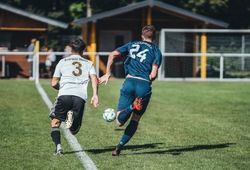
We love to hear stories about our former clients, and how well they are doing in the USA.  Charlie Jones, ( shirt number 22 in the image below ) is a great example of one of our former clients doing well.

Charlie Jones initially secured a soccer scholarship to Lincoln College, but has since transferred his scholarship across to Stony Brook University in New York. Lincoln College competes as a Division II member of the Central Intercollegiate Athletic Association, whereas Stony Brook University competes at Division I level.

At Lincoln College, Charlie was only one of a number of students to make the Deans list and his ability in soccer, helped to take his team  to the National Championships in Texas, where his team finished 5th in the Nation.  The opportunity to further study, and a soccer place was then offered by Stony Brook University where Charlie is currently, and is excelling in both his academic studies, and in his athletics.

At FirstPoint USA we always endeavor to place our clients to a college or university which best suits them.  Charlie’s hard work has certainly paid off , and his story will certainly stand to be an inspiration to any young student-athlete hoping to go out to the United States on a scholarship.

We caught up with Charlie to hear about his experiences in the USA :

What was your sporting background before going out to the USA?

Before I came out to the USA, I was playing in the conference north for Stafford Rangers.  I was the captain for the reserve side and broke into the first team as a 17 year old.

Please describe your athletic career since going to University.

My athletic career has been very enjoyable, as well as being a great experience that has helped me grow as a player.  I have also had the opportunity to travel to many different places throughout America because of the soccer schedule. It has been very exciting, and a great experience.

Please outline your highest accomplishments throughout your athletic career

I attended Junior College for my first two years at Lincoln College, where my freshmen year was a disappointing soccer year for my self and ended short. In my sophomore year, I went into it feeling as though I knew more about the American game.  That season, we finished with 21 wins, 4 draws and just 2 loses. We made the Nationals Championships for the NJCAA for the first time in the schools history and fished 5th in the Nation! I then transferred to a D1 university in New York, where in my first season we won the American East Conference and qualified for the NCAA tournament. I have won 2 championships so far in my 3 years and I’m looking forward to seeing what my senior year has to offer.

What are your future plans?

I am still unsure of my future plans.  At the moment, I’m focused on getting my degree and seeing where my soccer career takes me.

What would you say are the benefits of having an American college experience?

I feel that I have grown, not just as a soccer player but as a person.  I feel more independent and I feel that I can reply on myself .  The American college experience has helped me to do this.

What was the highlight of your time in the USA?

I have met many difference people from many different U.S states and countries, who have made this experience easy and enjoyable for me.  My team mates and their families are quick to welcome you to their house whenever you are homesick.  So, I would have to say that the friends that I have met have definitely been the biggest highlight for me.

What made you apply to FirstPoint USA?

I initially heard about FirstPoint USA through a teammate at Stafford Rangers – he had recently applied, and I liked the sound of the opportunity that was made available.

Were you pleased with the offers you were made?

I found FirstPoint USA online and sent a few emails to find out more.  I wasn’t sure how the American system worked, or which schools were the best ones to attend.  I chose Lincoln College because my team mate from Stafford Rangers played there so we went together.  I was happy that I was going out there with some one I knew well, and as my time went on in America I knew more about how the system worked.  After I graduated from junior college,  I knew I was going to go to a D1 University. After my time at Lincoln, I had many different offers from a number of different schools,and it was a hard decision to make – but I was happy I had chosen Stony Brook University.

Would you recommend FirstPoint USA to others?

I would recommend FirstPoint USA to people and I have already done so.

What would be your advice be to any young athletes considering an American scholarship?

If you get the chance to go, then take it! My friends back home all wish they had the change to have the experiences I have had, whilst they are still young.  It helps you to build a better future and it also gives you the opportunity to do what you love – to play competitive soccer everyday!

Well done Charlie, and thank you for checking back in with us!  We wish you continued success at Stony Brook University, and for the future!


Are you currently out in the USA? Or, have you graduated from University, having been through the FirstPoint USA program?  Do you have a story to share?…..We’d love to hear from you! Contact Kirstine at kirstine.hughes@firstpointusa.com

Share
avatar

Top Five Most Valuable Colleges

Check out this rundown of American College Football’s Most Valuable Teams, according to Forbes.com

5.  University of Michigan Wolverines

Current Value: $94 million
Two-Year Change in Value: 15%
Football Profit: $47 million
Conference: Big Ten
Head Coach: Brady Hoke

The Wolverines saw a 15% increase in team value since 2009, which was mostly influenced by Michigan Athletics’ academic funding. Michigan contributed more to football scholarships than any other public university on our list.

4. Louisiana State University Tigers

Current Value: $96 million
Two-Year Change in Value: 12%
Football Profit: $47 million
Conference: SEC
Head Coach: Les Miles

The local economic impact of LSU’s home games has helped secure their place as the SEC’s most valuable team. The Tigers generated $8.5 million in local spending for each of their seven home games.

3. Pennsylvania State University Nittany Lions

Current Value: $100 million
Two-Year Change in Value: 1%
Football Profit: $53 million
Conference: Big Ten
Head Coach: Tom Bradley

Penn State joined Texas as the only two teams able to generate more than $50 million for their respective athletic departments

2. University of Notre Dame Fighting Irish

Current Value: $112 million
Two-Year Change in Value: 4%
Football Profit: $47 million
Conference: Independent
Head Coach: Brian Kelly

Notre Dame was the only school able to generate more than $10 million in additional spending per home game last season.
1. University of Texas Longhorns

Current Value: $129 million
Two-Year Change in Value: 8%
Football Profit: $71 million
Conference: Big 12
Head Coach: Mack Brown

Texas football generated $65 million for its athletic department, $15 million more than any other school. That athletic value helped offset the fact that the Longhorns didn’t make a bowl game last season.
Source

Share
avatar

European players hoping colleges expand their recruiting pool

Check out this story, found on ESPN about the need for European sporting talent in American colleges :

Nowadays, nearly every potential college football recruit in the country is identified before he reaches his junior year of high school.

Players’ statistics and measurements are documented on numerous Web sites, and seemingly no stone goes unturned in the never-ending search for top talent.

Gene Galin/NC State Athletics – Markus Kuhn was just looking for a chance to play in the United States.

Thousands of miles across the Atlantic Ocean, though, there remains untapped talent in Europe. But finding and identifying those players who are good enough to play in the U.S. remains extremely difficult.

An ESPN.com review of Division I-A rosters found fewer than 60 players who attended foreign high schools. Most of the international players came from Canada and American Samoa islands, areas that have long been recruiting hotbeds for U.S. colleges. Conversely, fewer than a dozen players came from faraway places like Germany, Sweden and Australia.

In fact, European players are often the ones recruiting American coaches, instead of vice versa.

“I believe there are tons and tons of players across the Atlantic that college coaches just don’t see,” said Stanford guard Gustav Rydstedt, who grew up in Stockholm, Sweden. “There were so many guys who went straight into NFL Europe that could have had great college careers. I think it’s really an untapped resource. There are great, great players in places like Germany, France and Sweden.”

NC State found one in sophomore defensive end Markus Kuhn. He started playing football in his native Germany at the age of 15. Kuhn’s youth team had only 15 players and practiced on a field covered with holes and, worse, rocks. The Weinheim Longhorns rarely had enough players to field both an offense and defense.

“Practice was more like playing around,” Kuhn said. “It was horrible.”

Because of his large stature, Kuhn was named to the German Football League’s all-star team four straight seasons as a linebacker. He was even invited to try out for an NFL Europe team at the age of 18. When NFL Europe officials invited him to a second tryout in Orlando, Kuhn declined because he worried it might jeopardize his college eligibility in the U.S.

At the very least, Kuhn realized he was talented enough to play at an American college. He just had to find a school that was willing to give him a chance to play.

In the fall of 2006, Kuhn and his father organized his academic transcripts and scheduled times for him to take the SAT and an English proficiency exam, a requirement for foreign students attending U.S. colleges. They made a DVD of Kuhn’s football highlights and flew to Washington, D.C., where they began a week-long tour of colleges.

Their first stop was Division I-AA Liberty University in Lynchburg, Va., which offered Kuhn a scholarship on the spot. Then they went to Division I-AA Richmond, which also showed sincere interest in him.

“We were like, ‘OK, let’s try some bigger schools,’” Kuhn said.

I’d just knock on the door of the coach’s office, walk in and say, ‘I’m from Germany and I can play football, too.’

–NC State’s Markus Kuhn

So they drove further south and visited Duke, East Carolina, North Carolina, NC State and Virginia.

“Everybody was kind of shocked,” Kuhn said. “I’d just knock on the door of the coach’s office, walk in and say, ‘I’m from Germany and I can play football, too.’ The coaches gave me weird looks, but they were all really nice. They figured if I’d spent so much time and money coming from Germany they could at least look at my DVD.”

Kuhn’s father, Wolfgang Kuhn, thought NC State would be the perfect place for his son. Kuhn’s father is a retired mortgage broker and his mother is a housewife. The family lives in Viernheim, Germany, which is about an hour’s drive south of Frankfurt.

“As soon as we got to NC State, my father thought it was the nicest place we’d been so far,” Kuhn said. “He thought Wolfgang’s son should play for the Wolfpack.”

Then-Wolfpack coach Chuck Amato invited Kuhn to compete in a high school combine the following day. But since Kuhn was no longer a high school student, he couldn’t participate. Amato offered Kuhn a scholarship anyway.

Amato was fired after the 2006 season, and the Wolfpack hired Boston College’s Tom O’Brien to replace him.

“I didn’t hear from NC State for a while,” Kuhn said. “I thought they’d forgotten about the German guy.”

So Kuhn sent an e-mail to nearly every Division I-A head coach in the country. Kuhn also sent a DVD of his highlights to two Internet-based recruiting services, so coaches could see him in action.

Duke Sports Information – Marcus Lind wanted to see how he stacked up against better competition, so he came to the States.

“I’m sorry, but it was a major pain in the ass,” Kuhn said. “A lot of coaches didn’t even call me back. Some of the ones who did were like, ‘Markus, you look good, but we don’t know anything about you.’ I understood where they were coming from. I was a German kid who never played high school football and the only thing they had was a short highlight tape of me. They didn’t know even how good my opponents were.”

Kuhn said Virginia called him back and offered him a scholarship if he was willing to spend one season at a prep school. California and Hawaii also showed a lot of interest in him.

Finally, O’Brien called Kuhn shortly before national signing day in February 2007. Kuhn and his father flew back to the U.S. for an official visit. Kuhn enrolled at NC State a few months later.

“He was on the [prior coaching staff's recruiting] list and they were trying to bring him in at mid-semester,” O’Brien said. “We slowed down the process because we wanted to make sure of what we were doing.”

O’Brien became convinced Kuhn could play in the ACC after watching the DVD of his highlights.

“You knew the competition wasn’t very good; it was pretty apparent it wasn’t,” O’Brien said. “But with his physical stature and the fact he ran and chased the ball and did a lot of things you can’t coach, you realized he had potential. He had a willingness to play and play hard. He had a lot of those intangibles. Of course, a lot of us also think we’re great teachers.”

And Kuhn turned out to be a fast learner. When the Wolfpack began preseason camp before the 2007 season, Kuhn was a third-team defensive tackle. Injuries forced him onto the field by the second game and he stayed in the rotation the rest of the season. Kuhn finished the season with 32 tackles, 3½ tackles for loss, one sack and two forced fumbles while playing defensive tackle and end.

“He had no technique,” O’Brien said. “He was a stand-up player in Germany and we asked him to put his hand on the ground. Unfortunately for him, he had to play last year. The best thing for him would have been to take a redshirt year and learn the game of football and get beat up a little bit and get his nose bloodied a little bit. He played on just sheer determination last year.”

Sheer determination is often what drives many foreign players, most of whom have little or no exposure to college coaches. Some foreign players arrive in the U.S. as exchange students and end up staying to play college football.

Central Michigan linebacker Matt Berning, from Duisburg, Germany, attended one year of high school in Mexico, Mo. Miami offensive tackle Ian Symonette, from the Bahamas, went to high school in Houston. Duke offensive tackle Marcus Lind, a native of Sweden, attended St. Thomas Aquinas High in Fort Lauderdale, Fla.

Rydstedt spent one season playing high school football in Southaven, Miss., before enrolling at Stanford.

“It was a little different,” Rydstedt said. “The humidity hit me as soon as I got off the plane. It was great football. They’re serious about football in the South. It is a good time.”

I think colleges are going to get overseas and start recruiting European players. Schools like Duke and Stanford have such high academic standards they have a very limited pool of players they can recruit. Why not go overseas and expand that pool? –Stanford guard Gustav Rydstedt

Most foreign players come to the U.S. looking for better competition and a free education.

“I wanted to study abroad for one year and play football at the same time,” Lind said. “I wanted to play against better competition to see how I matched up.”

Football coaches at St. Thomas Aquinas High told then-Duke coach Ted Roof about Lind before the lineman even arrived in the U.S. Once Roof saw Lind’s 300-pound frame, he offered him a scholarship. Lind said Auburn, Miami, NC State and South Carolina also recruited him.

After Lind committed to play for the Blue Devils, he told Roof about Pontus Bondeson, his teammate on the Swedish national team.

“Marcus said, ‘Coach, I’ve got this friend I want you to look at,’” said Roof, now defensive coordinator at Minnesota. “He said, ‘If you think I’m big, you need to take a look at this guy.’”

Lind showed Roof a picture of Bondeson standing with his girlfriend. The 6-foot-6, 275-pound defensive tackle towered over her.

“The guy was about two feet taller than his date,” Roof said. “But she could have been 4-feet-4. We wouldn’t have known.”

Duke flew Bondeson and his mother to Durham, N.C., for an official visit. When Roof offered Bondeson a scholarship, his mother wept in Roof’s office.

“It was out of joy and happiness,” Bondeson said. “She knew how much I wanted to play college football. It was a dream come true.”

It’s a dream many European players have.

“I think colleges are going to get overseas and start recruiting European players,” Rydstedt said. “Schools like Duke and Stanford have such high academic standards they have a very limited pool of players they can recruit. Why not go overseas and expand that pool?”

Even if the pool to get there is about 3,500 miles wide.

Article by Mark Schlabach – view it here

Mark Schlabach covers college football and men’s college basketball for ESPN.com. You can contact him at schlabachma@yahoo.com.

Share