
Re-born In the USA

Check out this blog on Talkingbaws.com by Craig Hughes, from FirstPoint USA Clearing team. Craig enjoyed success as Team Captain (soccer) of the Vikings at Grand View University, a scholarship he secured through FirstPoint USA.

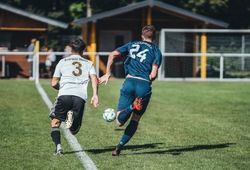
In this article, Craig discusses the differences between studying and playing football (soccer) in the UK to the USA.  In this article, he talks of his experiences about youth development in the States from high school, as opposed to what he experienced in Scotland, before he lived in the USA.

Check out the blog, amongst others here

“For years we have ridiculed America for their butchering of the beautiful game they like to call “soccer.” Since the introduction of the MLS in 1993, the Americans have been playing catch up with the rest of the football world, however after years of investment, promotion and emphasis on youth development now it could be us that are looking across the pond for inspiration.

Let’s first of all look at the differences in development at high school level. In the UK athletically gifted kids are given a choice; either focus on your sport, or focus on school, there is no balance. Some leave school at the age of 16 with dreams of going pro, only to be let go by the age of 18 with no qualifications to fall back on. Others are advised to stop living in a dream world, let football take a back seat and focus on your studies. Why can’t they do both?

In the US the set up is completely different, high school sports are taken very seriously. They have at least one full-time coach, training and weight lifting regimes and top class facilities. The incentive for the kids to get involved is the opportunity to play at college and then possibly go on to play professional. There is also the aspect of being well-respected and popular around the school. An incentive for parents is if they do well in high school sports, there is a good chance they will get college scholarship offers, making their education a lot more affordable and giving them the opportunity to progress as both a student and an athlete.

Last year I attended a high school game between Johnston and Urbandale in Des Moines, Iowa. The difference between this and Kilsyth Academy versus St Maurices (schools in Scotland) was frightening! The game was played on a Friday night under the floodlights, in a 1000 plus all seated stadium system in front of a huge crowd of families and students. At Kilsyth academy we had a crowd of around 5 neds, a blaze pitch complete with bits of broken glass and stones and the occasional dog turd.

There is a common feeling that high school players in the US have it too easy. They have the great facilities, their name read out and a picture of them on the scoreboard when they come onto the pitch. They are pampered like full-time professionals from an early age, they don’t know what it’s like to play on a freezing Saturday morning away to Castlemilk. The shouts they receive from the fans and coaches are all of encouragement and praise. They have never had a character building rollicking, known as “constructive criticism” from an irate coach or parent after a poor performance.

This idea in my opinion is totally inaccurate. Although they don’t receive the same sort of abuse and criticism from the sidelines, they are taught from an early age that without working hard you won’t get anywhere in life. You play for four years at high school, as a freshman (1st year student) you must work your way into the team, you will face competition from the older more experienced, bigger, stronger kids and you must prove yourself to be worthy of a place. You may not even make the squad until your third or fourth year. The importance of education and discipline is also drilled into these kids, if they are failing classes they will be removed from the team.

Many great Scottish prospects seem to burn out at an early age; they lose enthusiasm for the game and become disillusioned or lead astray and American high school kids have the same distractions, however they have an environment which encourages them to stay focussed. Generally, American players are so committed to working hard in the gym and eating the right things, this is emphasised to them from an early age. It is easy to see the benefits later on in their career, look at the top American players like Carlos Bocanegra, Clint Dempsey and Landon Donovan, not just footballers but athletes. It’s no coincidence these guys play for longer, and generally don’t suffer as many niggling injuries. Let’s compare that to the West of Scotland lifestyle of Buckfast and fish suppers with an attitude that no matter how unfit you are natural ability will see you through.

I am not for one minute saying the American’s have this sport completely figured out, and with sports like basketball, baseball and American football taking centre stage, they probably never will embrace football quite like us.

I am not naive enough to think that in this current economic climate anyone is in a position to throw huge amounts of money at the problem, nor can attitudes be changed overnight, so to completely emulate the US system would be totally unrealistic. However with the current dire situation of Scottish football, we must turn our attention to youth and building for the future. Maybe we can learn a thing or two from the land of opportunity.”

Share

What to Study?

For many young students, choosing what to study at college or university can be a daunting task.  A draw for many to the American college system is that it can be more flexible than programs in other countries. There is a choice to have a more general education in your first two years at most U.S Universities before deciding on a major. It was certainly a draw for Buckeye, Aisling Coyle, as she discusses in this interview.

For some inspiration about the majors that you could take, check out this list that we discovered on U.Snews.com which runs down 9 top majors that are degrees in growth fields for the future!

9. Public Health

Whether because of earthquakes, the spread of antibiotic resistance, or healthcare reform, the call for public health experts is great. As of 2009, some 140 institutions offered an undergraduate major, minor, or concentration. A sampling: the University of Washington, East Tennessee State University, Tulane, San Diego State University, UC-Berkeley, the University of Maryland, and Johns Hopkins.

The major prepares students for entry-level jobs in government agencies, health corporations, community nonprofit organizations, and healthcare facilities. And if the coursework inspires a desire to move into the personal health realm, the degree appeals to the admissions folks at medical schools, too.

8. New media

Colleges are offering a slew of variations under the new media umbrella, combining traditional journalism or communications studies with offerings in digital media and design. A sample: the new media studies major at Alma College, MIT’s Comparative Media Studies program, and the University of Southern California’s B.A. in interactive entertainment. Students at USC combine a liberal arts background with a specialization in cinematic arts such as filmmaking, writing, and directing.

Other schools offering new media majors include Wellesley College, Pomona College, the University of Minnesota, Bowling Green State University, and Syracuse University. New media degrees can lead to jobs in filmmaking, television, game design, animation and programming, graphic design, audio and visual arts, social media, E-text and Web publication, advertising, journalism, and media research.

7. Nanotechnology

In this young science, unusual physical, chemical, and biological properties show up when materials are in the microscopic realm that starts at one billionth of a meter. Nanomaterials already help make golf clubs, skis, car parts, and dental implants stronger, and are expected to make tomorrow’s buildings and bridges lighter and more durable. Nanotechnology-based medicines promise to send toxic drugs straight to tumors, and the technology could be the key to more energy-efficient fuel cells, solar panels, and batteries, and to environmental cleanup.

The industry is poised to grow to $2.4 trillion worldwide by 2015 and employ 2 million people in the country by 2020. The University at Albany—SUNY started the nation’s first nanotechnology graduate program in 2004, and in the last year has rolled out two undergraduate degrees. The degrees prep students for grad school, for careers in nano-related industries or basic research, or for jobs in the physical sciences, materials science, physics, biophysics, chemistry, or biochemistry. Other schools that have introduced similar majors include Drexel, Louisiana Tech University, UC-San Diego, and University of Central Florida.

6. Information assurance/cyber security

Job demand has grown “tenfold over the last 10 years” for cyber security or information assurance, says Dickie George, information assurance technical director for the U.S. National Security Agency. The NSA, with the Department of Homeland Security, sponsors the National Centers of Academic Excellence in Information Assurance, which designates schools that meet established standards in teaching students to spot and fix vulnerabilities in the nation’s information infrastructure. Mississippi State University, the University of Tulsa, Dartmouth College, and Carnegie Mellon University are among the 145 institutions with undergrad programs designated centers of excellence.

Information assurance students learn about the technical aspects of protecting computer systems, networks, and individual computers from viruses, worms, hackers, terrorist threats, and corporate espionage. Students may also take computer crime and forensics classes, as well as E-commerce courses to learn about different business models and privacy and security protocols. They also study how to plan, analyze, design, and implement modern information systems.

5. Homeland security

This has to be among the fastest-growing educational disciplines in recent memory, says Stanley Supinski, director of partnership programs for the Naval Postgraduate School’s Center for Homeland Defense and Security. Of the more than 300 programs that have sprouted since 9/11, about 75 lead to undergraduate degrees.

The center, created in 2002 to be the nation’s lead homeland security educator, develops and shares curricula with interested universities. Courses offered by many schools include critical infrastructure, criminal justice, emergency and disaster planning, weapons of mass destruction, and constitutional issues in homeland security. Schools partnering with the center include Arizona State, Eastern Kentucky University, Drexel University, Duke, Georgetown University, and John Jay College of Criminal Justice.

4. Health informatics/information management

The need is huge for professionals who can help acquire, manage, and use information to improve health and manage payments. The profession is kind of a bridge between clinicians and IT geeks, notes Claire Dixon-Lee, executive director of the Commission on Accreditation for Health Informatics and Information Management Education, which says 54 baccalaureate programs are currently accredited, including those at the University of Washington, Temple University, the University of Illinois—Chicago, Loma Linda University, and Weber State University. The American Medical Informatics Association projects a need for more than 50,000 workers in the next five to seven years.

This is a good path for someone who isn’t “all about direct patient contact,” says Heather Hodgson, who recently earned a B.S. in health information management from the College of St. Scholastica, home of one of the nation’s oldest programs. Two years into a nursing degree, Hodgson changed majors, taking biomedical core courses—anatomy, physiology, medical terminology—along with basic computer courses, management information systems, and systems analysis and design. Specialized courses rounded out the program.

3. Environmental studies/sustainability

Programs in environmental studies are spreading as energy, water, food, and climate promise to be defining issues of the century. Starting this fall, students at the University of Wisconsin—Madison can major in either environmental studies or environmental sciences, for example. Environmental studies is an interdisciplinary degree, requiring students to select among courses in food and agriculture, health, energy, biodiversity, climate, history and culture, land use, and policy.

2. Computer game design

Today’s game design students will join an industry expected to reach $82.4 billion globally by 2015, compared to $55.5 billion in 2010. Becker College, along with neighbor Worcester Polytechnic Institute, is a popular destination for prospective game designers. Others include DePaul University, Michigan State University, and Rochester Institute of Technology.

“This is affecting the way we train people—think firefighters, military, but also corporate—the way we shop … and the way products are pitched to us,” says Lucia Dettori, associate dean of Depaul’s College of Computing and Digital Media. Graduates work in game production, development, design, art, programming, computer graphics, and human computer interaction. They are also software engineers at gaming studios and in architecture, medicine, law, and other industries using interactive simulation.

1. Biomedical engineering

The body’s systems are prone to wear and tear, and biomedical engineers apply engineering science and technology to come up with fixes: They look for chemical signals in the body that warn of cancer, invent and improve medical devices and prosthetics, engineer new drugs and vaccines, and design robots to assist in surgery. The U.S. Bureau of Labor Statistics names biomedical engineering the fastest-growing occupation between 2008 and 2018, with a 72 percent rate of job growth.

Undergraduate programs number about 70 now, according to the biomedical engineering accreditation body. The University of Washington and Ohio State University have rolled out programs, while schools with established majors include Johns Hopkins University, Duke University, Georgia Institute of Technology, Massachusetts Institute of Technology, and University of California—San Diego.

Source : U.S News, Education


Share

How To Get A Female Soccer Scholarship to the USA

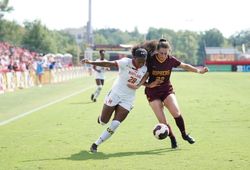
Soccer is one of the fastest growing sports in the United States and there is an ever increasing demand for talented young International soccer players to join University and college teams.

Coaches have a particular interest in recruiting talented young female soccer players, and there are over 1400 women’s soccer programs at Universities across the United States.  For women’s programs, there is a maximum of 14 scholarships available for a Division I team, 9.9 for Division II, 12 for NAIA programs and 18 for NJCAA programs.

Being recruited for a female soccer scholarship to the USA is a fantastic opportunity to play the sport at a very high level with world class facilities and coaching.  It also means that you are capable of pursuing a University degree simultaneously!  This is a very attractive option to those who don’t want to compromise their sport for their studies or vice-versa.

Coaches are interested in recruiting scholarship candidates who have good academic standing.  They want players who can perform as well in the classroom as on the pitch! There is equal weight placed on academics and athletics in the USA, so if you don’t maintain your grades, then you don’t play!

Coaches will be looking for talented young athletes who have the ability or who they see potential in.  They want to recruit those who are committed to, and passionate about the game.  Position specific skills are attractive and can give you an edge above the rest..

..can you stand out and be noticed on the pitch?

You can find out more about the experiences that some of our clients have had in the USA on our Blog :

For example,

Adele Jackson is a candidate for the FirstPoint USA Hall of Fame after graduating from Montevallo University where she enjoyed great success.  Find out more about her experience here

Lucy Cunningham was nominated our “Athlete of the Month for January 2012“. Lucy secured a soccer scholarship to The University of Memphis. Find out more about Lucy’s story and the advice she would have about pursuing a soccer scholarship to the USA here.

 In this video, our Director of Scouting chats with one of our women’s soccer clients, Brooklyn Kerlin at the Soccer Showcase event where we invite coaches (100+ last year!) from the US to London to see our athletes first hand.

So…how do you get a female soccer scholarship to the USA?

Firstly, you can register your details with us and we can tell you if you are eligible. There is no obligation to commit to anything.  If you are approved then we will send you more information about our program, and how FirstPoint USA can help you on your way to the USA.

If successful, you will be allocated your own personal Sports Consultant who can answer any questions or concerns you might have.  Our Consultants (like the majority of our staff) are highly capable of answering these questions, as they have all been to the USA on Sports Scholarships themselves.

We will assess your sporting ability and academic capabilities and then if we think you are a good scholarship candidate, we will then offer you a place on our program.  At this point, you will have made the decision if this is the right option for you.  We understand this is a huge decision for an individual, and their families so we will do our best to help you at every step of the way!

Our service includes:

  • SAT, ACT & TOEFL test’ enrolment; where applicable.
  • Video capture, editing and processing.
  • Creation of your athletic and academic resume.
  • Academic eligibility pre-qualification.
  • Athletic eligibility pre-qualification.
  • International transcripts conversion into US GPA (as per NCAA guidelines).
  • NCAA & NAIA Clearinghouse enrolment; where applicable.
  • Showcase participation; soccer only.
  • Promotion of your resume to our network of American coaches and universities; relative to your athletic/academic credentials.
  • Daily management of coach communication.
  • Review of college interest and offers.
  • Advice about admissions requirements; affidavit of support, transcripts, I-20, etc.
  • Advice of F-1 student visa application and interview.

Find out more about the U.S Sports scholarship process from some of our staff :

For more information and to take the first step towards the opportunity of a lifetime, register today!


Share